
Why Mobility Is Where Training Actually Begins
Jan 28, 2026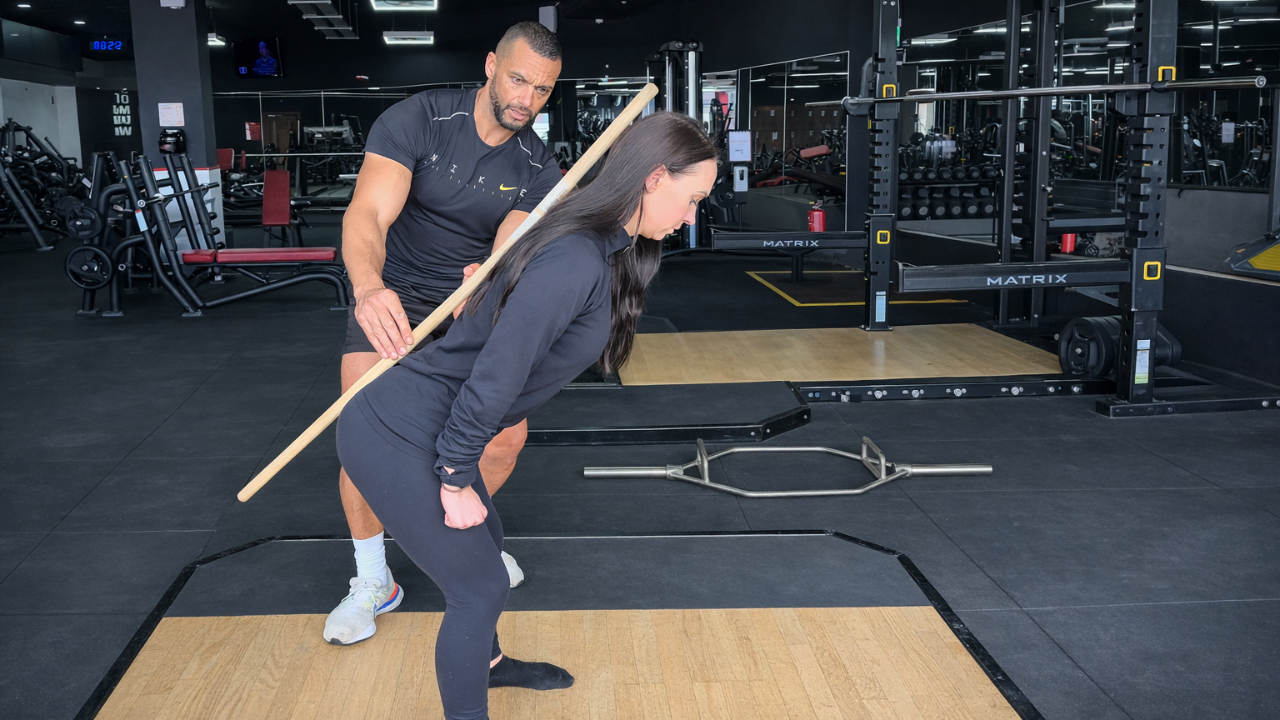
I was recently on a call with a guy (Richard) who’s just joined my Fit Body Code Programme. He was asking me about mobility training because he’s now in his 40s, overweight, and every time he plays paddle, or just goes for a walk, he gets terrible low back pain.
I first asked him what he thought mobility was, and here is the list of points he mentioned:
- Stretching
- Rehab stuff
- Being supple
- Something I should do for a warm-up before exercise
This is what I think most people understand mobility to be. However, in reality, this thinking couldn’t be further from the truth, and it’s this misunderstanding that causes people to develop stiff, aching joints and suffer more injuries from the age of 35+.

What Is Mobility?
Not many people know this, and many are ignorant of it (Personal Trainers and Strength Coaches included), but mobility is the gateway to strength.
Mobility is NOT flexibility.
It is the ability to actively access, control, and trust joint range under low threat, and it is the gateway through which strength must pass.
It’s not stretching or a second-thought warm-up.
It’s actually the starting point for training that everyone skips (myself included, back in the day) before embarking on their fitness, strength, and fat loss journey.
From my own personal experience, I’ve trained poorly in the past and managed to sustain two prolapsed discs in my lower back, patella tendinitis in both knees, an Achilles tendon tear, and multiple muscle tears over the years. The reality is this: despite my knowledge and experience to exercise correctly, you simply can’t build a strong structure on shaky foundations.
In this brief article, I’m not going to dive into heavy technical details, but I am going to give you a clear outline so you understand mobility and why you must start using it as the only safe, principle-based method to restore joint function, reduce injury risk, and rebuild youthful capability in your body.
Yes, you can physically turn back the clock in a very real sense if you implement this correctly. Here’s how:
Biological
- Increased joint nutrition via movement
- Improved tissue tolerance
- Increased bone density through loading newly accessed ranges
Neuromuscular
- Expanded motor repertoire
- Strength expression in positions previously unavailable
Psychological
- Restored confidence
- Reduced fear-avoidance
- Increased self-efficacy
A human who can move, load, and trust more of their body than before is functionally younger.
Mobility — Your Starting Point
Over the last 25 years of personal training and coaching, I’ve studied under some of the best practitioners and coaches in the world. This background gave me the ability to assess my clients’ biomechanics before they started training and provide a prescriptive base of corrective exercise to alleviate joint problems while developing health and fitness goals.
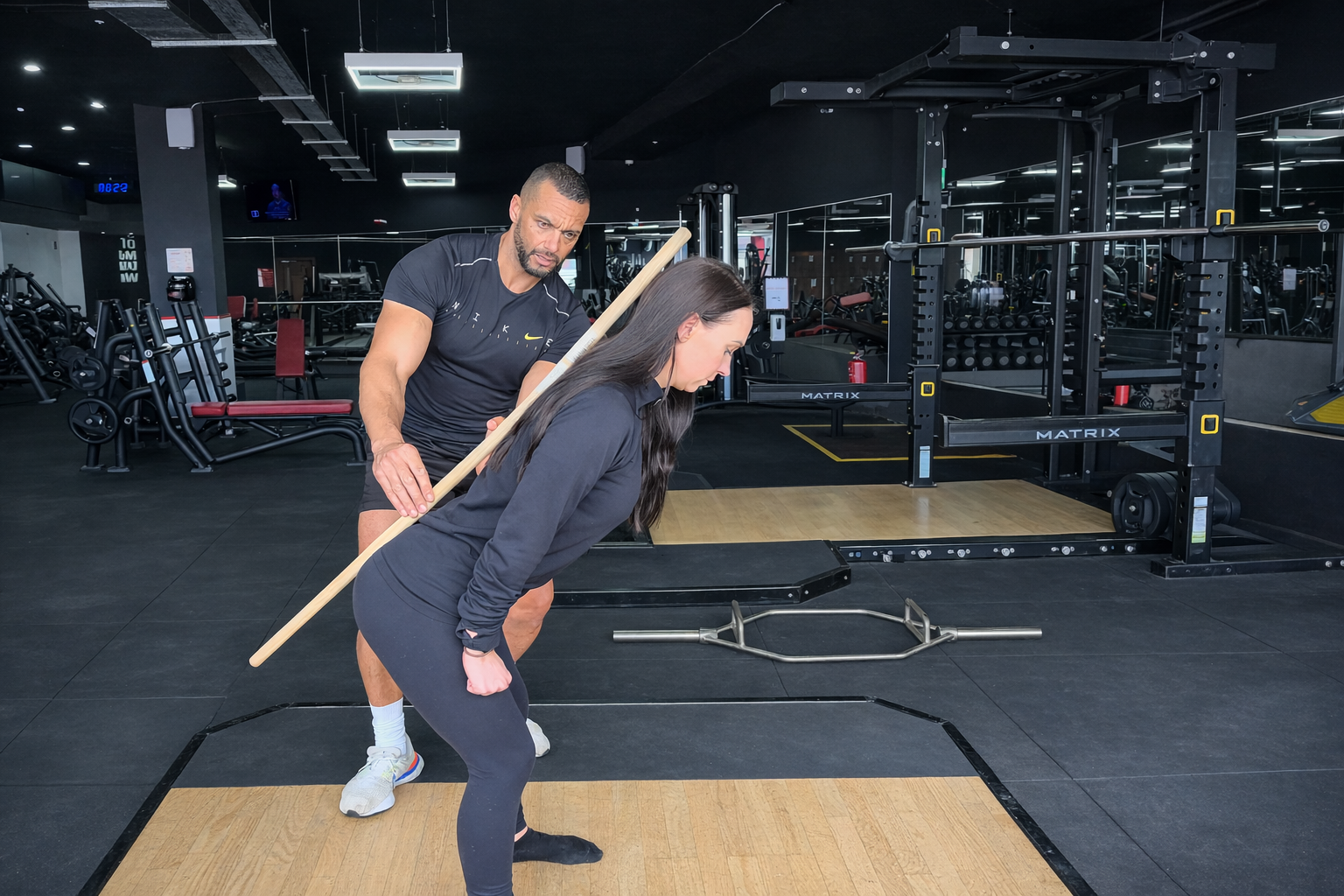
Now that I’m an online coach, I’ve had to change how I assess clients because I can’t see them face-to-face. As a result, I created a powerful assessment approach inside my Fit Body Code Programme called The Functional Strength Ladder.
The Functional Strength Ladder (FSL) is the foundational process that every client moves through. It provides a step-by-step progression to take you from stiffness and lack of confidence in your body to becoming fit, strong, and physically capable.
There are six stages of the ladder, but today’s focus is on the beginning:
Ground Zero.
The six Functional Strength Ladder stages are:
- Ground Zero
- Rung 1 – Restore
- Rung 2 – Stabilise
- Rung 3 – Load
- Rung 4 – Integrate
- Rung 5 – Express
I’ll share each stage with you in future articles. For today, let’s focus on where you’re likely at right now—Ground Zero.
Ground Zero — Your Mobility Starting Point
Without having to look at you, I can probably assume with some confidence that you have several constraints in your joints and muscles’ ability to move well.
Question:
Can you access the range your life, training, or sport demands without pain, fear, or protective tension?
Can you crouch and bend down to pick something up from the floor without holding your breath or bracing yourself?
At Ground Zero, the primary and secondary constraints you face are:
- Range: How much joint and muscle range of motion you have without pain or stiffness
- Minimal Load: Your ability to control your own bodyweight at those end ranges
- Velocity: The speed and control at which you can perform movement
Velocity matters because the body must be able to brake and control movement slowly before it can tolerate speed without threat. More on this in my next article.
Ground Zero isn’t about fancy mobility moves you’ve seen on Instagram or becoming a “supple leopard” in six weeks. It’s about identifying where you can move safely and building incremental progression to overcome limitations in joint range, bodyweight control, and movement speed, without pain or stiffness.
If you answered no to the questions above, keep reading—because cardiovascular or weight training will not fix it.
Or, if you want to skip straight to my FREE Mobility Assessment and receive a personalised Mobility Scorecard, click here to access
What You Need to Accomplish at Ground Zero
Mobility, as used in the Functional Strength Ladder, means:
- Active control of joint and segment range
- Under low threat
- With calm breathing
- And no compensatory tension
From the mobility exercises provided, you need to be able to access the required range both passively and actively, without pain, guarding, or fear.
You can follow the exercises yourself, or you can record the movements as instructed, upload them via the Mobility Assessment page, and I’ll assess them and send you a personalised scorecard within 24 hours.
The Mobility Assessment
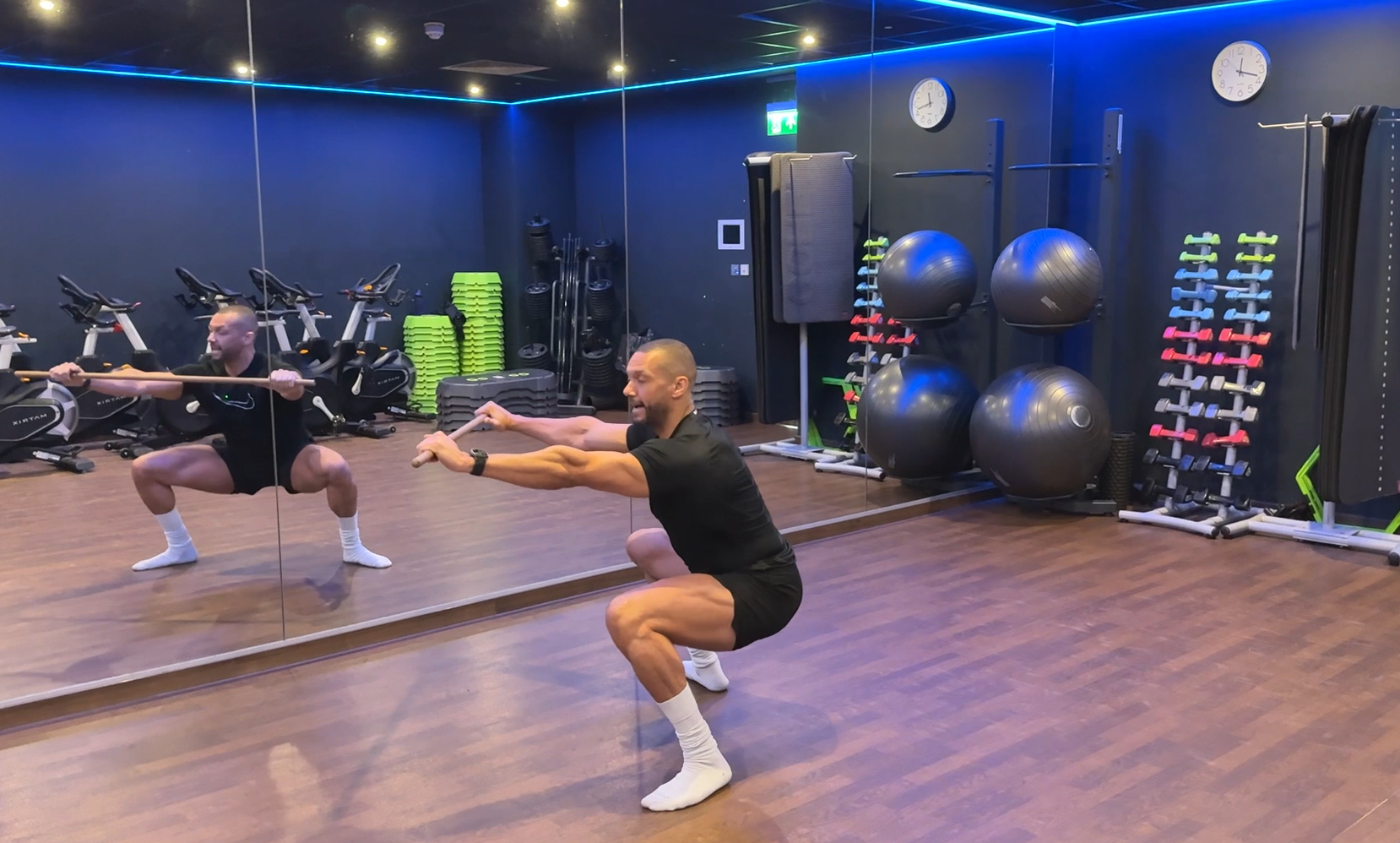
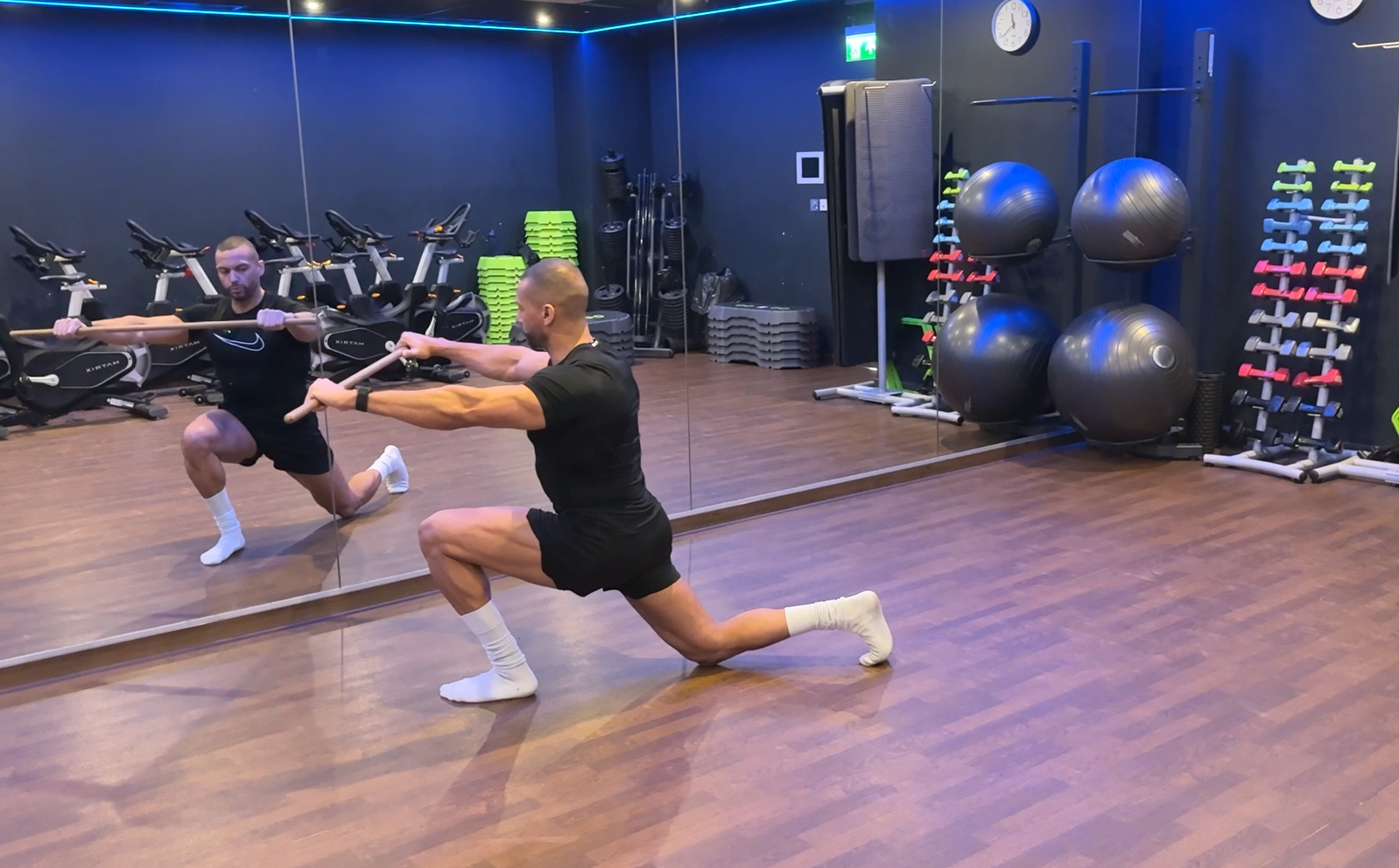
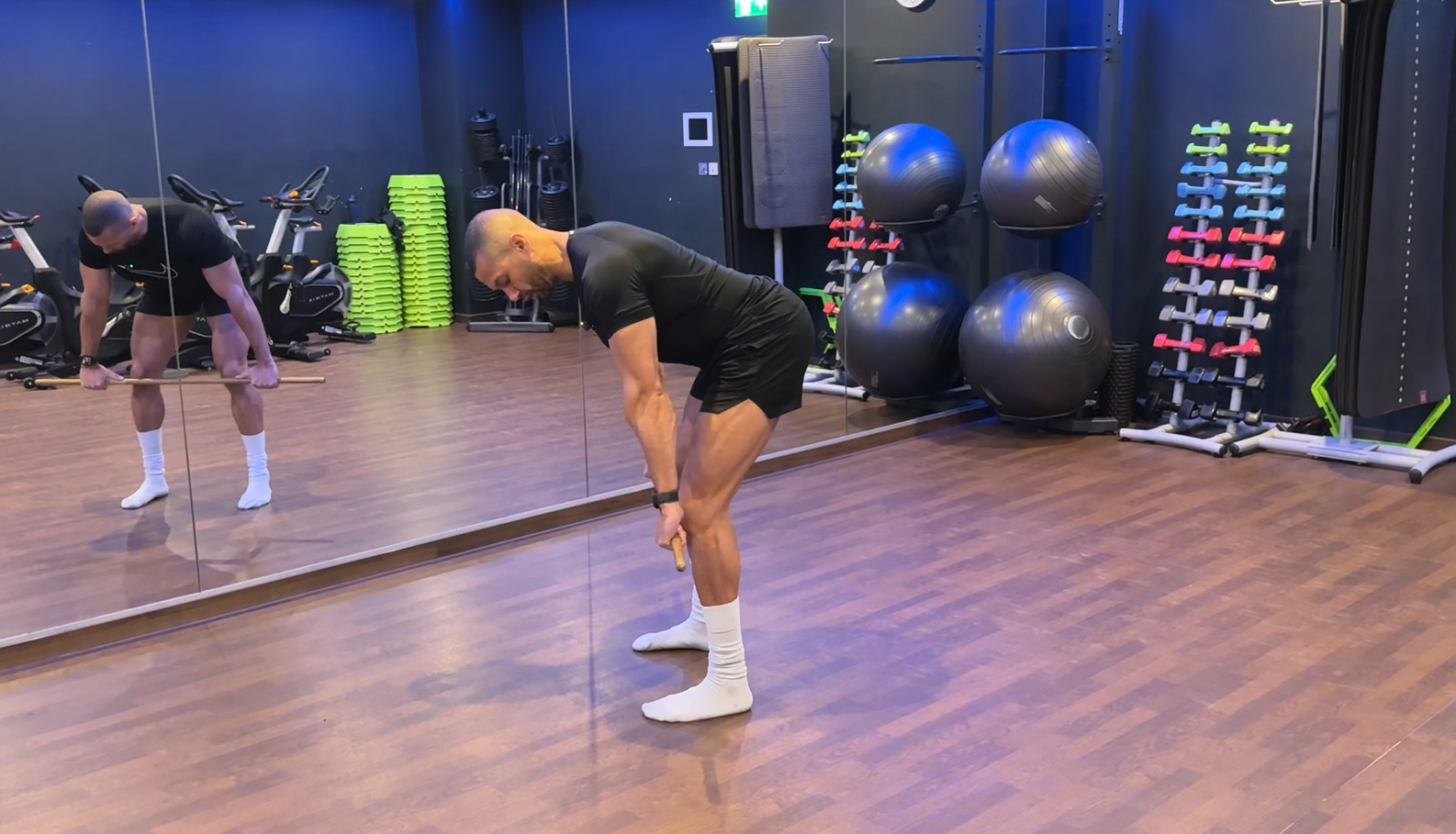
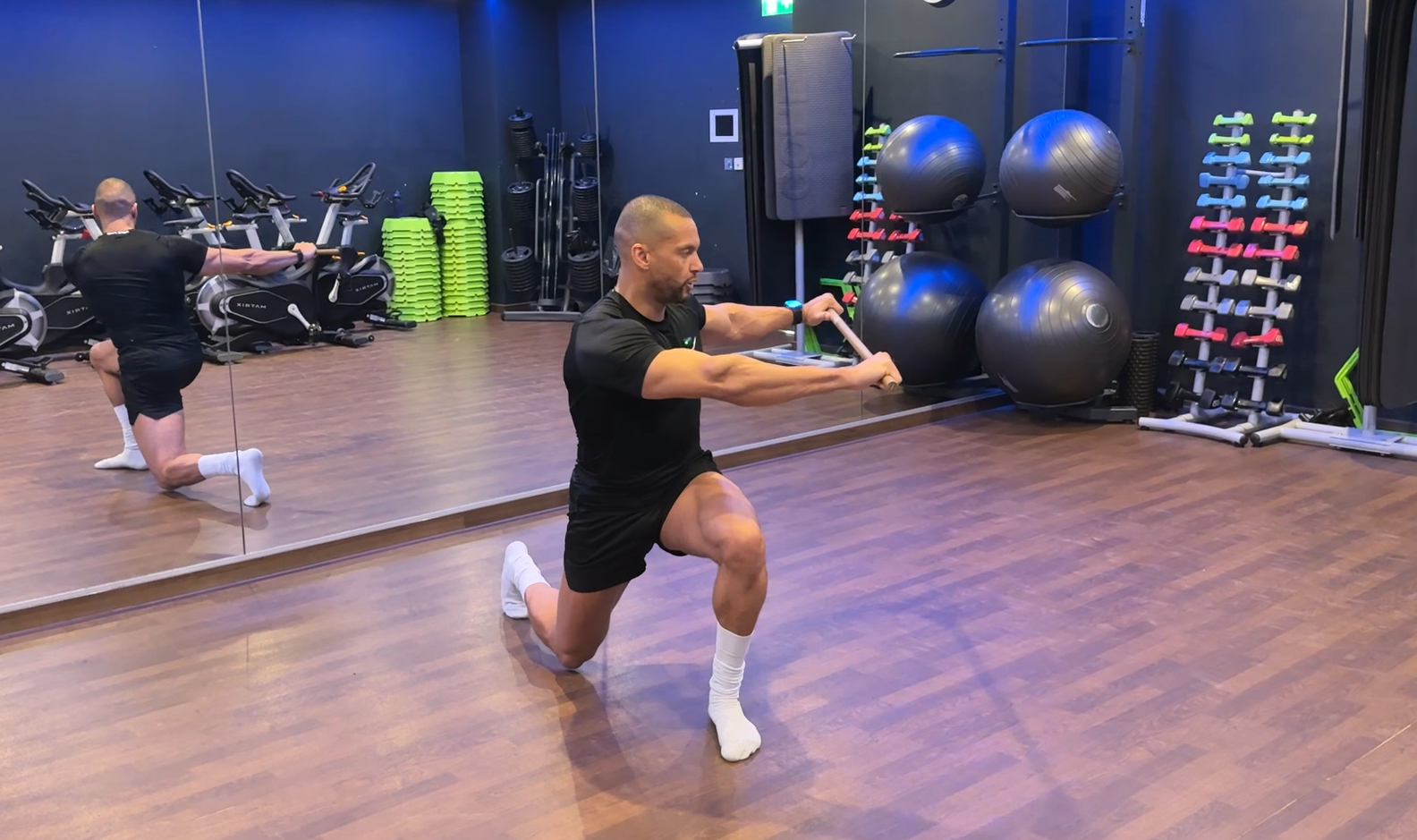
Below is the list of mobility and functional strength movement patterns you need to perform using the criteria above as your success barometer. To ensure accuracy, follow the instructional videos on the Mobility Assessment page.
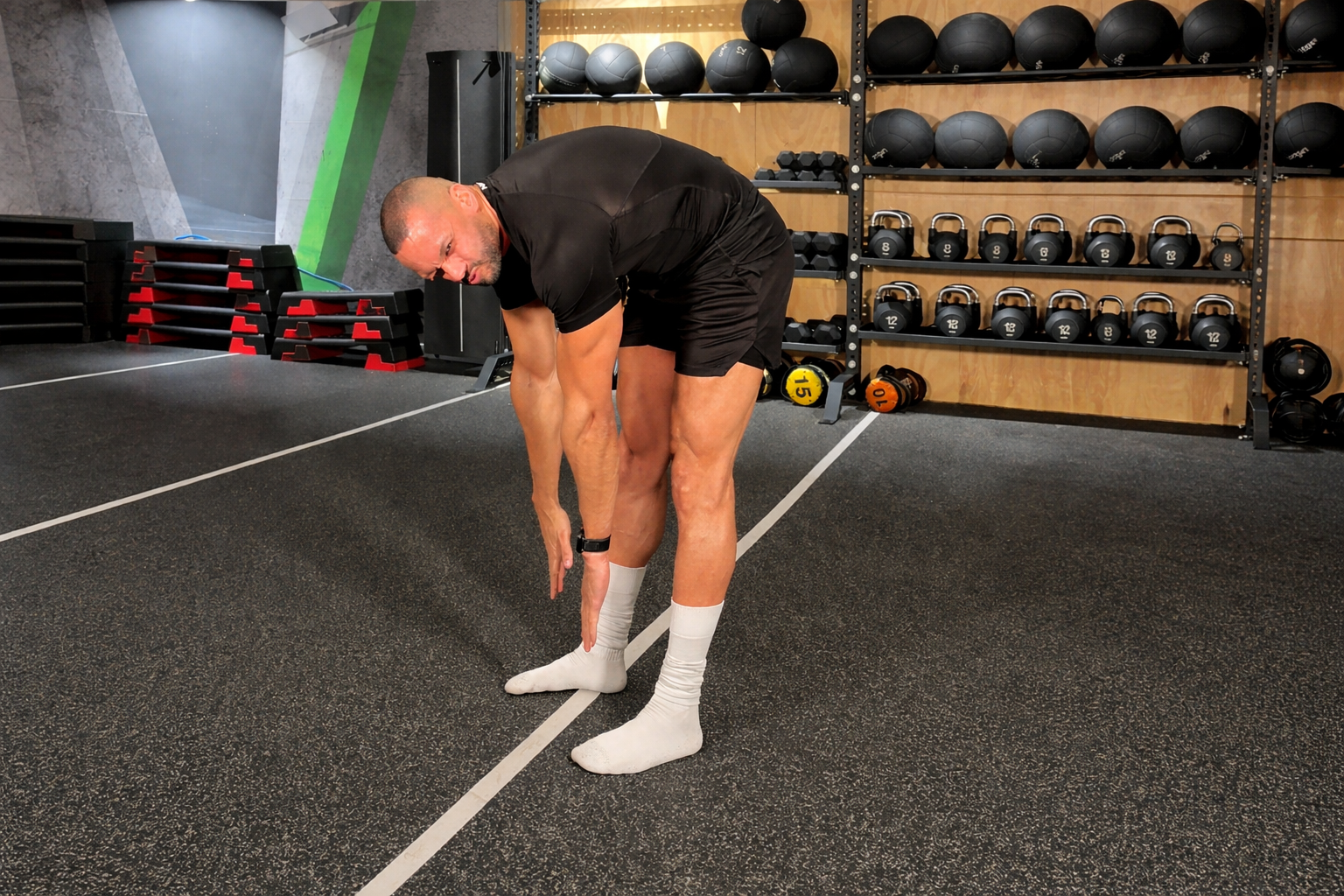
1. Bodyweight Squat
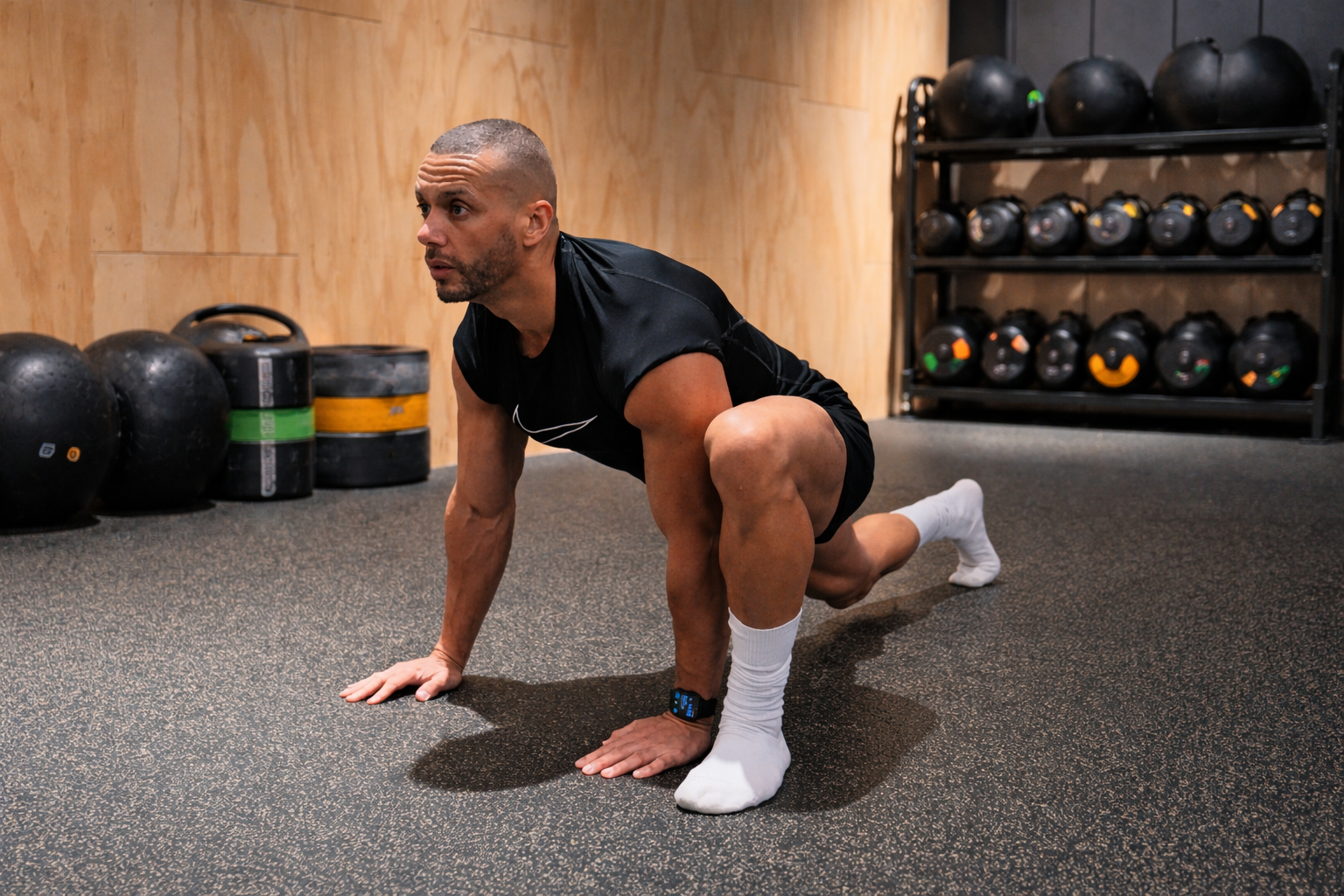
2. Front Lunge
3. Hip Hinge
4. Hip & Thoracic Rotation Test
5. Lateral Lunge
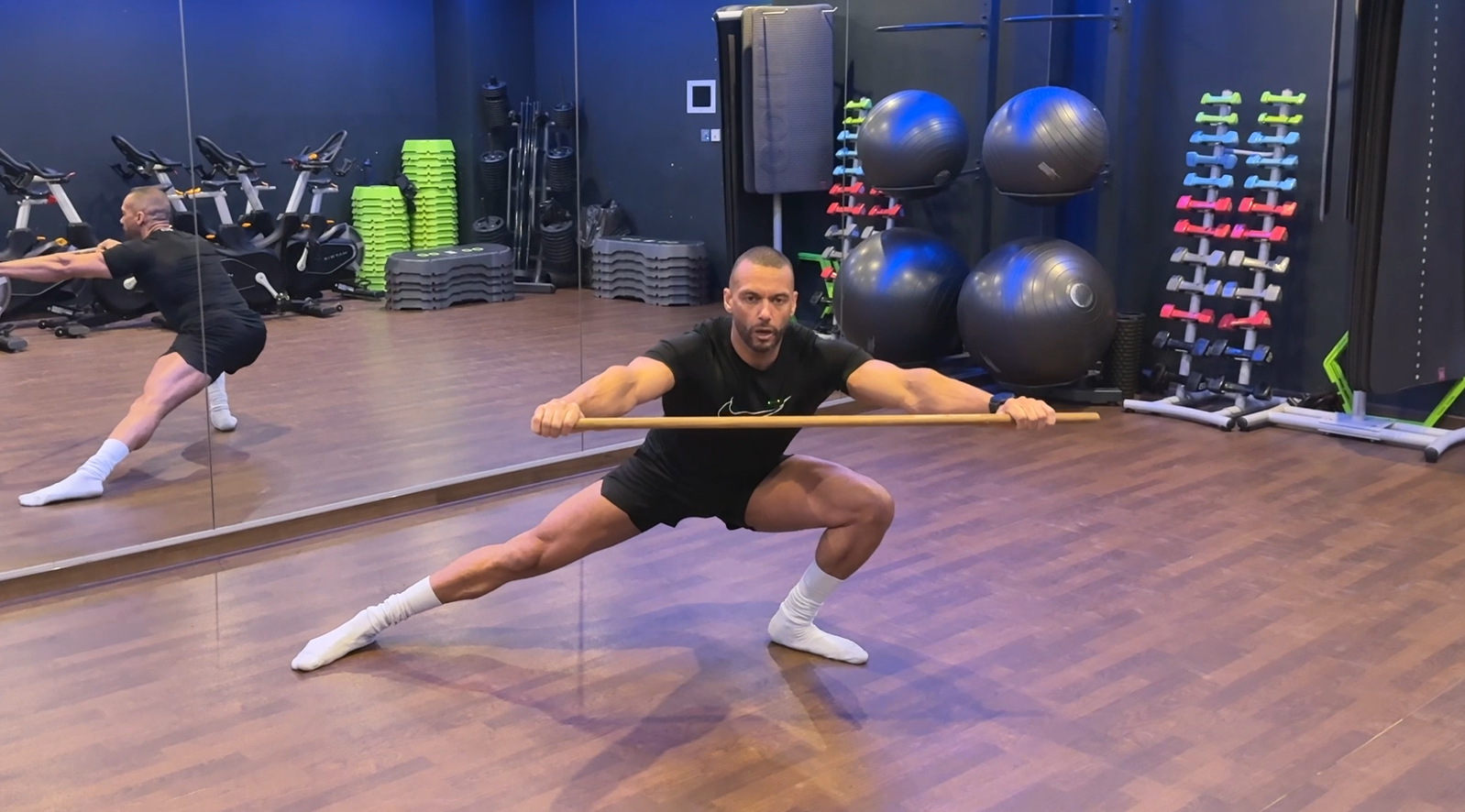
6. Row & Posterior Chain Test
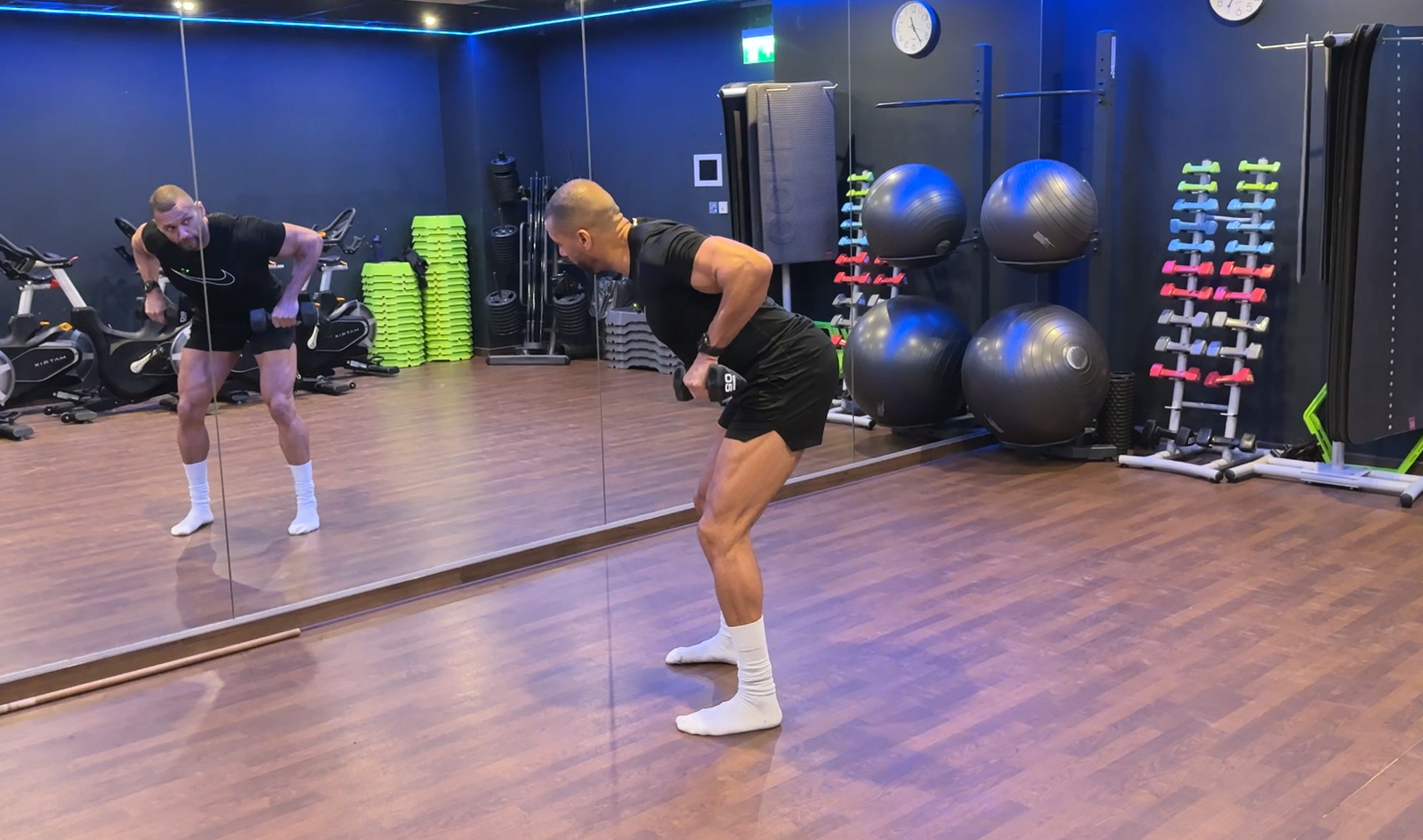
7. Hip Internal / External Rotation Test
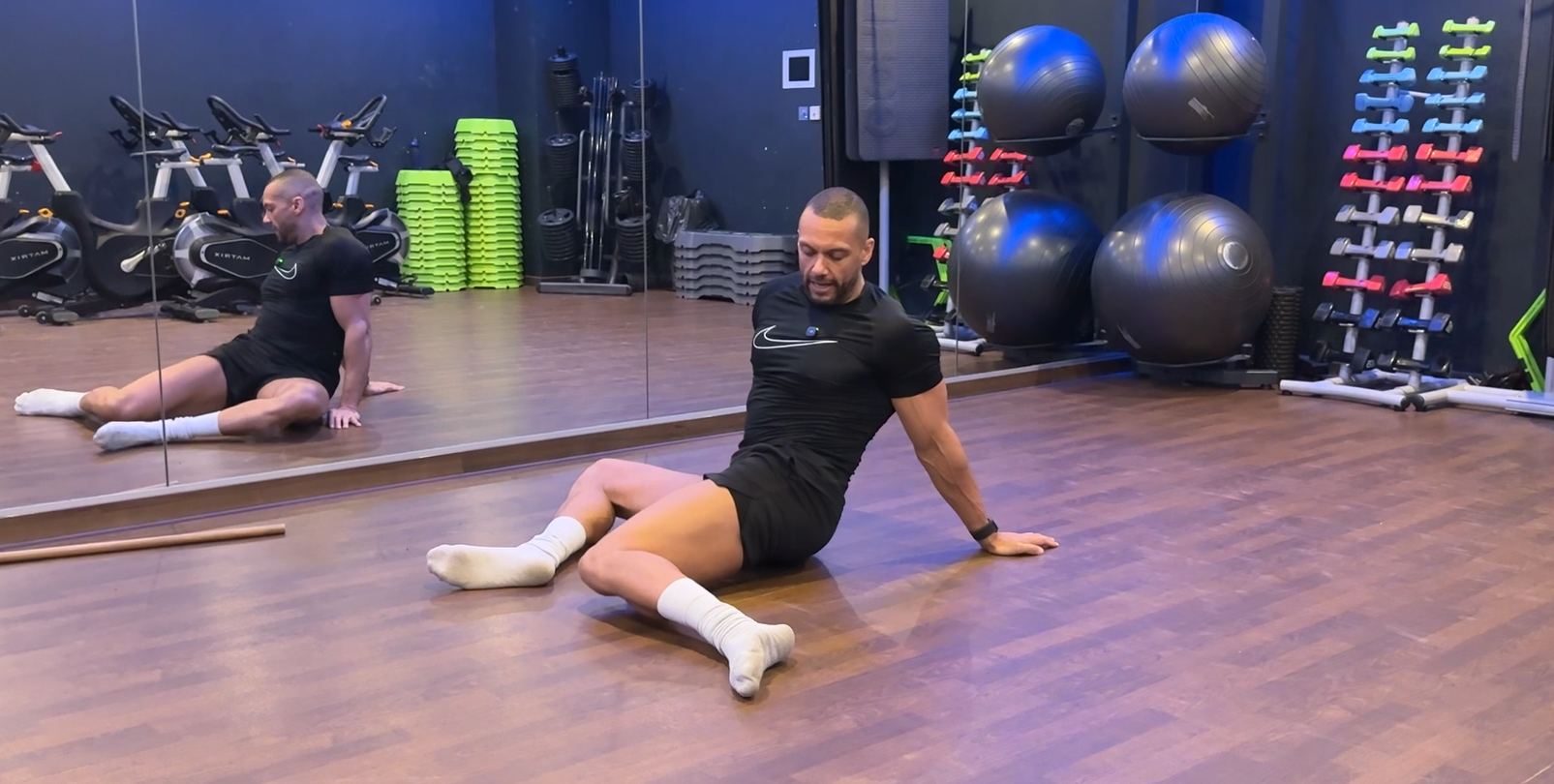
8. Push & Anterior Chain Test
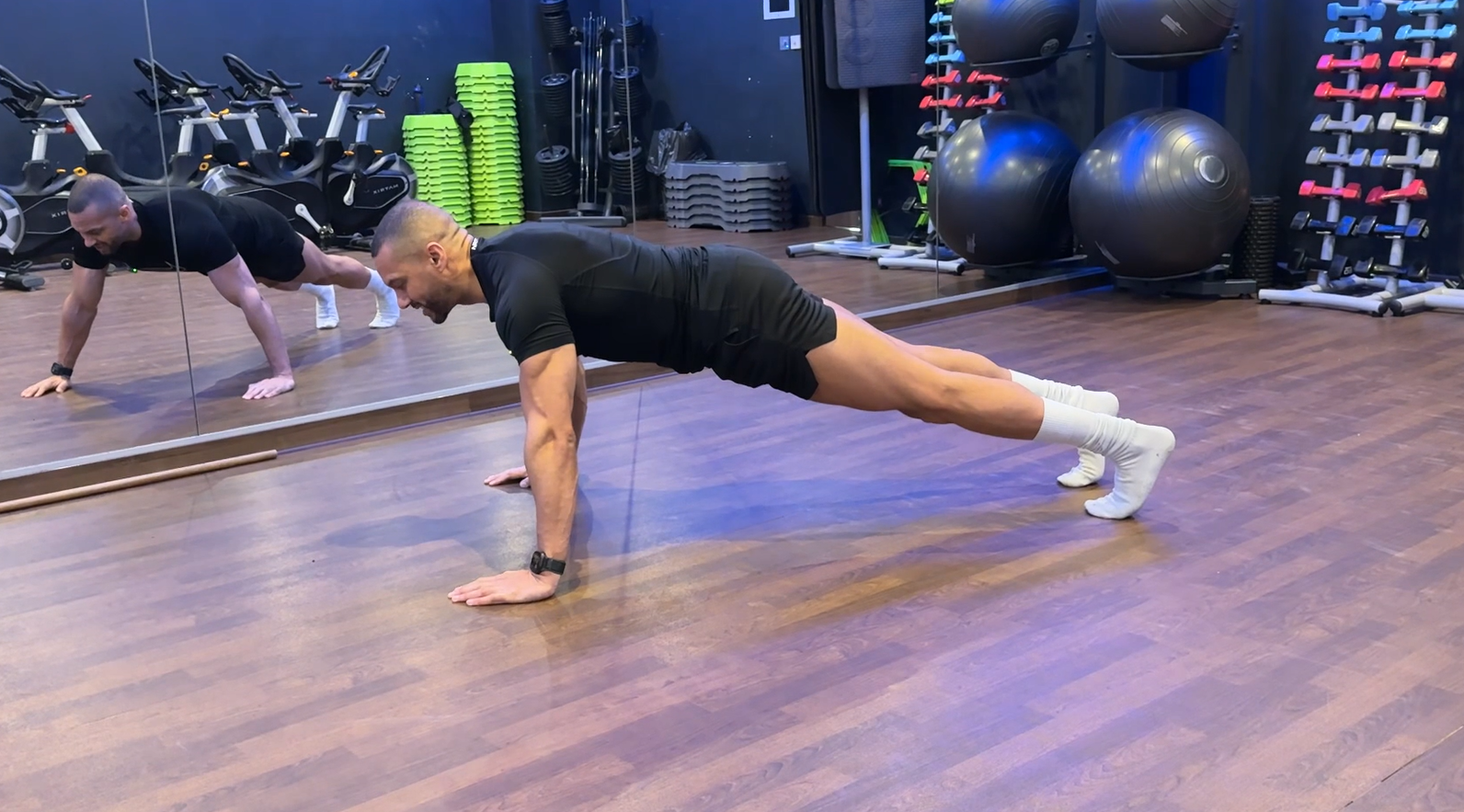
If you can perform all of these at full range while meeting the criteria, congratulations, you’re ready to move on to Rung 1 of the Functional Strength Ladder.
Something tells me that’s probably not the case for most people, which means you need to start your mobility training from Ground Zero.
Do not start weights or cardio training if you feel significant tension or pain during these movements; you will only make things worse.
To put it into a metaphor:
Loading a restricted joint is like attempting Everest with injured legs; the problem isn’t effort, it’s access.
Red Flags — When Poor Mobility Exposes You
You’re moving into the danger zone if you experience:
- Pain spikes at end ranges
- Breath-holding to “force” a position
- Visible guarding or flinching
- Pinching, catching, or joint threat sensations
From a coaching perspective, these are not minor issues. They are signals that force vectors are being resisted, not accepted.
If the body can’t control slow movement without threat, it has no business moving fast. Adding weight won’t solve this, and adding speed will only amplify the problem.
What You Should Do Next
If you completed the mobility assessment with only minor issues, record and send me your videos (details are on the Free Mobility Assessment page). I’ll review them and guide you on the next steps.
If you prefer, you can also visit my YouTube channel: https://www.youtube.com/@LewisBaileyFitness
and explore my mobility exercise library.
If you experienced any red flags, I strongly suggest working with an experienced personal trainer qualified in corrective exercise, or you can contact me directly via WhatsApp (UK +44 7771 533 408) or email: [email protected]
Summary
To recap, mobility isn’t a second-thought warm-up, a bit of stretching, or basic rehab work.
It is your gateway to strength training and the foundation of any form of exercise you wish to do in your life.
- Mobility restores access
- Access restores confidence
- Confidence allows strength, fitness, and performance to be built without fear
If you want to live longer, stay fit, lean, strong, and physically capable of handling whatever life throws at you, it starts with mobility.
Learn to access good joint and muscle movement first, then build a confident, capable body on top of it.
Good luck, my friend, and I’ll catch you on the next one.
Lewis
Stay connected with news and updates!
Join our mailing list to receive the latest news and updates from our team.
Don't worry, your information will not be shared.
We hate SPAM. We will never sell your information, for any reason.
